

Monarch vs Empower (2026): Which One Should You Actually Use?
Monarch is a budgeting app that also tracks your investments. Empower is an investment and retirement tool that also shows your spending. Monarch costs $99.99 a year (or $14.99 a month) and is the better pick if you want a real monthly budget, especially with a partner. The Empower Personal Dashboard is free and is the better pick if most of your net worth is in a 401(k), IRA, or brokerage account. If you want both jobs done well, plenty of people run the two side by side.
Monarch vs Empower at a glance
| Monarch Money | Empower Personal Dashboard | |
|---|---|---|
| Price | $99.99/yr or $14.99/mo (Core); $199.99/yr (Plus) | Free |
| Free trial | 7 days | Not needed |
| Budgeting | Full: categories, rules, rollovers, cash flow | Basic spending summary |
| Net worth tracking | Yes | Yes |
| Investment analysis | Basic on Core; Morningstar fund analysis on Plus | Strong: fee analyzer, investment checkup |
| Retirement planning | Forecasting, Plus tier only | Free retirement planner with Monte Carlo |
| Partner access | Built around it: each partner has a login | A second user can be added with full access |
| Bank connections | Plaid, MX, or Mastercard (you can switch) | Mostly Yodlee |
| How it makes money | Your subscription | Wealth management fees (0.89% on the first $1M) |
The last row explains every other row. Monarch’s customer is the person paying $99.99, so the product is built around what that person does every week: categorize, budget, check in with a partner. Empower’s customer is, eventually, someone who hands over a portfolio to manage. So the free product is built around investments, fees, and retirement readiness, which are exactly the conversations that lead to an advisory account.
Neither is a trick. They’re two different business models, and each one produced the product you’d expect.
They aren’t really competitors
People compare these two because both show up in every “Mint replacement” list and both show a net worth chart. That’s where the overlap ends.
Open Monarch and the first thing it wants to talk about is this month: what came in, what went out, which categories are over. Investments are in there, and net worth is in there, but they’re the supporting cast. Open Empower and the first thing it wants to talk about is your portfolio: allocation, fees, whether you’re on track to retire. Spending is in there too, but it’s a summary, not a tool you’d run a household budget from.
So the useful question isn’t “which app is better.” It’s “which job do I need done every week.” If the answer is budgeting, Empower will frustrate you. If the answer is investments, Monarch’s Core plan will feel thin, and the parts that aren’t thin now cost $199.99.
Monarch Money: best for budgeting, especially as a couple
Monarch is a modern budgeting app with a real household feature. You invite a partner, each of you gets your own login to the same household, and the app is designed around the split between shared and individual accounts. Most apps still handle couples badly, and Monarch handles it well. That alone is why it keeps winning “best budgeting app for couples” roundups.
The core product covers what you’d expect from a paid budgeting app in 2026: account syncing, flexible budget categories with rules, cash flow, recurring transactions, goals, net worth history, and an AI assistant you can ask about your spending.
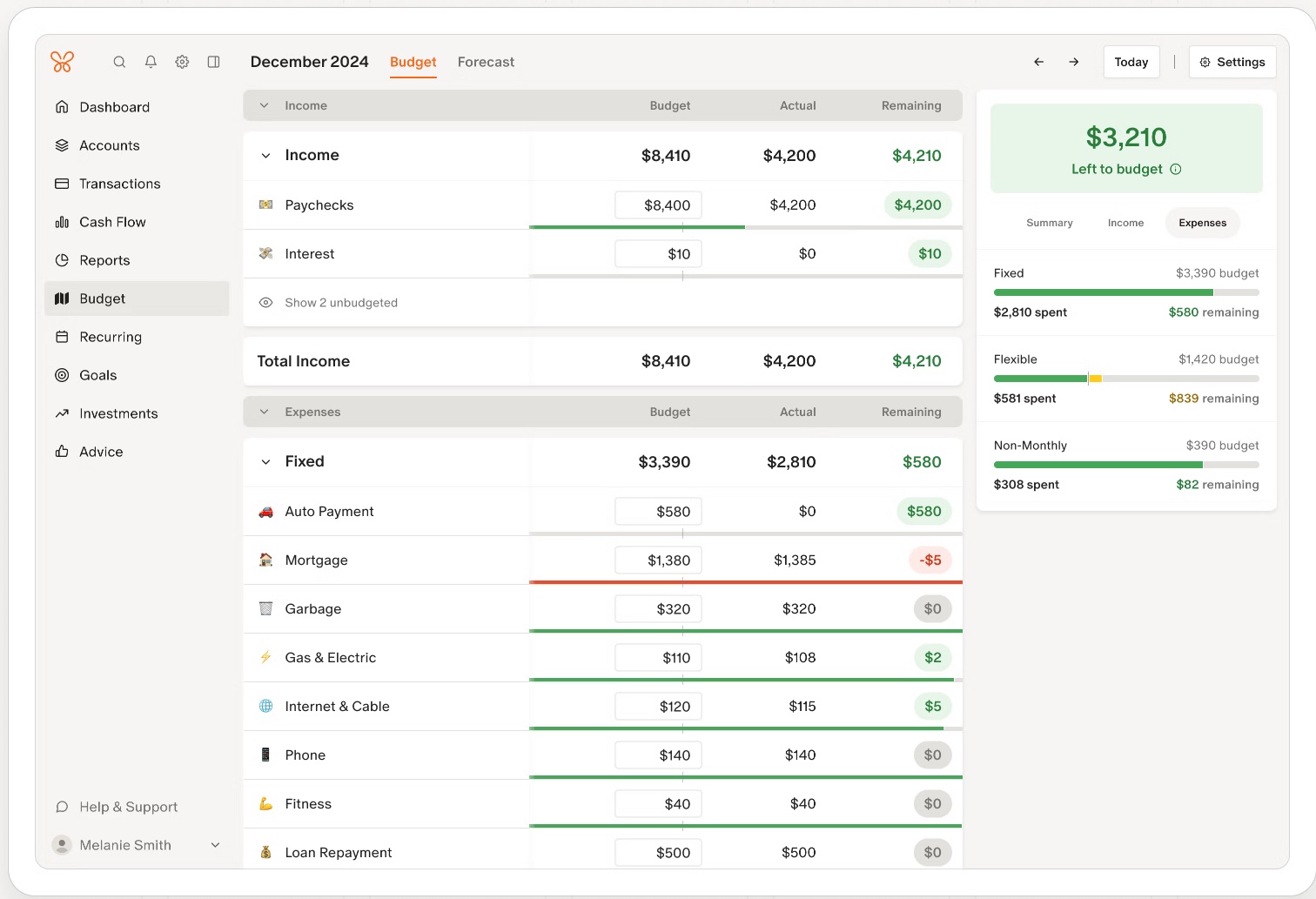

The change worth knowing about is from April 2026, when Monarch launched Plus. Forecasting (the feature that projects your net worth forward and answers “when can I retire?”), Morningstar-powered fund analysis, gains and losses, and business tracking all live in the $199.99 tier now. If you’re comparing Monarch to Empower on retirement planning specifically, you’re comparing a $199.99 feature to a free one.
Best for: Couples and households who want to budget together, and anyone whose main job for the app is monthly spending.
Pricing: Core is $14.99/month or $99.99/year. Plus is $199.99/year. Both have a 7-day free trial. monarch.com/pricing
Empower Personal Dashboard: best free view of your investments and retirement
Empower is the product formerly called Personal Capital, and it’s still the strongest free investment dashboard around. Connect your accounts and you get net worth, asset allocation, a fee analyzer that finds what your funds are quietly charging you, and a retirement planner that runs Monte Carlo simulations against your real balances. You can move the retirement age, add a big expense like college tuition, and see how the odds change.
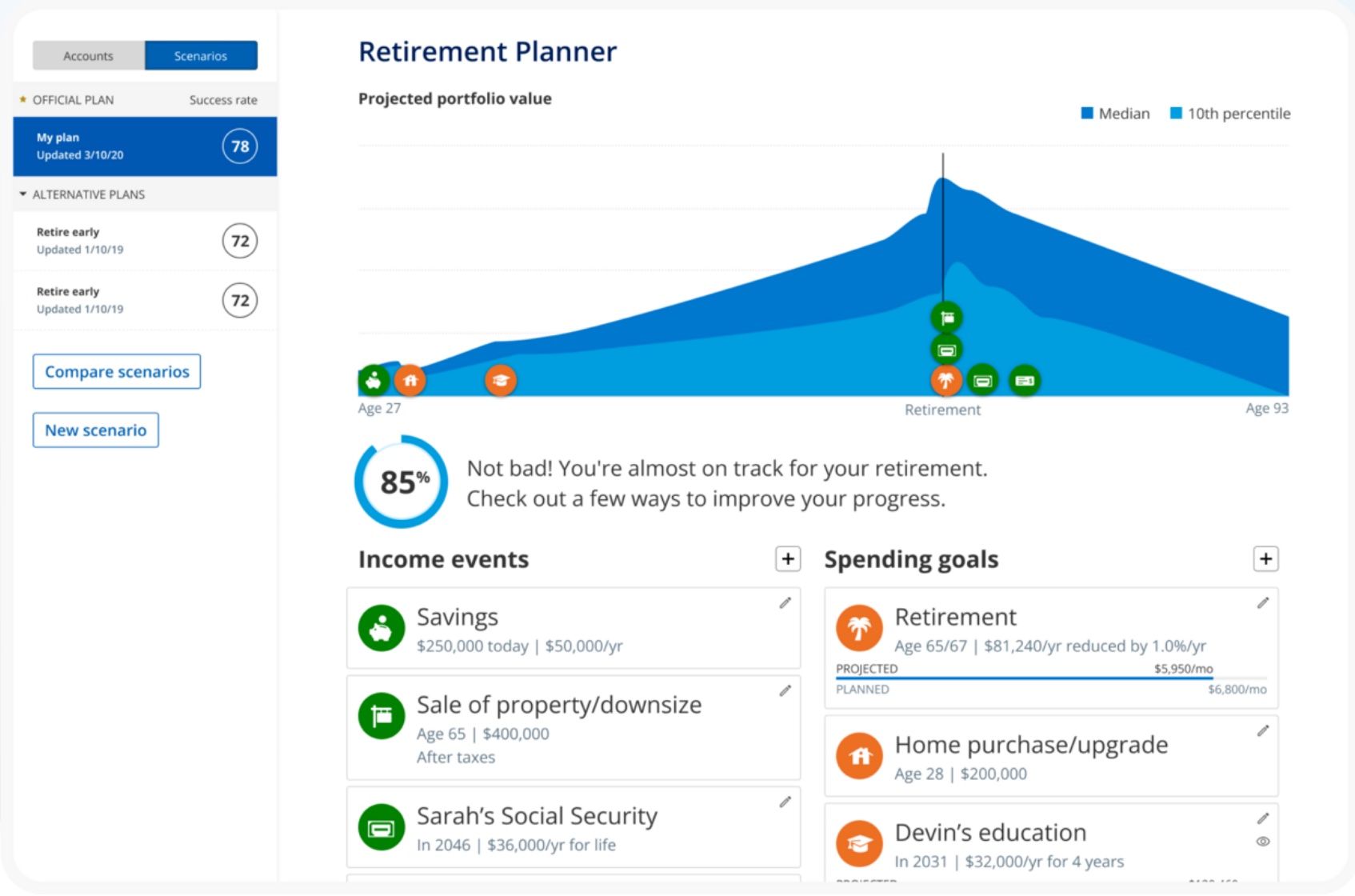
Its budgeting is the weak spot. There’s a spending view and a cash flow chart, but category control is limited and there’s no real budgeting system behind it. It tells you what happened. It doesn’t help you plan the month.
Then there’s the catch everyone mentions. Empower’s dashboard is free the way a model home is free to walk through. Nobody charges admission, and there’s a salesperson by the kitchen. Once your linked investments cross roughly $100,000, expect calls and emails offering its wealth management service. You can say no, and the dashboard keeps working. Some people find this mildly annoying. Some people find it bad enough to leave.
Best for: Investors who want free portfolio analysis, fee checks, and a retirement planner, and don’t need a real budget.
Pricing: Free. The optional wealth management service charges 0.89% a year on the first $1 million, falling in tiers above that (fee schedule). empower.com
Which one syncs more reliably?
Both break. Every aggregation app does, because the banks keep changing their logins and the aggregators keep chasing them. The difference is what you can do about it.
Monarch connects through three providers, Plaid, MX, and Mastercard Open Banking (formerly Finicity), and lets you switch providers for a given institution when one stops working. That’s a real fix, not a workaround. When Chase breaks on Plaid, you try MX.
Empower syncs most institutions through Yodlee and keeps a public known issues page for the ones that are currently broken. When your bank is on that list, you wait.
If you’ve been burned by a connection that stayed dead for weeks, that one difference may decide this for you.
What does Empower’s “free” cost if you say yes?
The dashboard costs nothing, and most users never pay Empower a dollar. But the advisory service is the whole point of the business, so it’s worth seeing the number the salesperson is working toward.
Annual advisory fee = assets managed × 0.89% (first $1M tier)| Assets managed by Empower | Annual fee at 0.89% | Monarch Core for comparison |
|---|---|---|
| $250,000 | $2,225 | $99.99 |
| $500,000 | $4,450 | $99.99 |
| $1,000,000 | $8,900 | $99.99 |
At $500,000, the advisory fee is about 44 times what Monarch charges for a year. That isn’t an argument against advisors. A good one can be worth far more than 0.89% if they stop you from panic-selling in a crash. It’s an argument for knowing that “free” is the front door of a product that costs thousands a year, and deciding on purpose whether you want to walk through it.
Which is better for retirement planning?
Empower, unless you’re already paying for Monarch Plus.
Empower’s retirement planner is free, uses Monte Carlo simulation, and runs on your connected balances. Monarch’s Forecasting is also built on your real account data, and it’s more tied into your actual budget, which is a real advantage: your projected savings come from what you actually spend. But it costs $199.99 a year, and it’s newer.
That gap, a budget on one side and a retirement plan on the other, is the reason I built Bonsave. Its projections run on the same connected accounts and categorized spending as its budget, and they’re included in the $7 a month plan rather than sitting in a higher tier. You can see both in the live demo without signing up. More on it at the end, since the two apps you searched for deserve a straight comparison first.
One caution applies to both. Monte Carlo tools give you a probability of success, and the answer is only as good as the spending number you feed them. If you haven’t pinned down what retirement will actually cost you, our retirement spending guide covers what the data says about how spending changes after you stop working.
If you’re on Empower now, is Monarch worth $99.99?
This is the question most people searching this comparison are really asking. Here’s the trade in plain terms.
What $99.99 buys you:
- A real budget: categories, rules, rollovers, and a monthly plan you can act on
- A household built for two people, each with their own login
- Three bank-connection providers instead of one, with the option to switch
- No wealth management sales calls
What you give up:
- Free
- The fee analyzer and investment checkup
- The free retirement planner (Monarch’s costs $199.99)
The honest test: did you open Empower this month to look at the net worth chart, or did you open it to plan your spending? If it’s the chart, stay. Monarch won’t change what you do, and you’d be paying $99.99 for a nicer version of a screen you glance at. If you keep meaning to budget and never do it because Empower makes it hard, switch. And keep Empower open on the side if you’ll miss the fee analyzer. It’s free, and nobody’s counting.
Can you use both?
Yes. It’s a common setup: Monarch for the budget and the shared household view, Empower for free portfolio analysis and an occasional fee check. It costs $99.99 a year total.
The trade-off is maintenance. Two apps means two sets of connections to keep alive, and bank connections break more often than anyone would like. If you’re the kind of person who fixes a broken link the same day, running both is fine. If you’re the kind of person who notices three months later, pick one.
How to choose
You budget with a partner → Monarch. Both apps let a partner in, but Monarch is built around it.
You mostly invest and don’t want to pay → Empower.
You want a real monthly budget → Monarch. Empower’s spending view won’t hold up.
You want to know if you’re on track to retire, for free → Empower’s retirement planner.
You want retirement forecasting tied to your actual budget → Monarch Plus, at $199.99 a year.
Your bank connection keeps dying → Monarch, for the choice of providers.
You hate sales calls → Monarch, or keep Empower and get comfortable saying “no thanks.”
You want both jobs done → Run both, or look at the next section.
If you’re still comparing more than these two, our best net worth tracker apps breakdown covers Kubera, Copilot, and Tiller as well, and the Mint alternatives list covers the budgeting side.
A third option, since you’re comparing
I built Bonsave because I wanted the Monarch half and the Empower half in one place without the upsell. It connects your accounts, tracks spending, budgets, and net worth, and its retirement projections simulate your real balances and spending against market history back to 1928 to find the earliest age you can stop working. It costs $7 a month with a 14-day free trial, and projections are included rather than sitting in a higher tier.
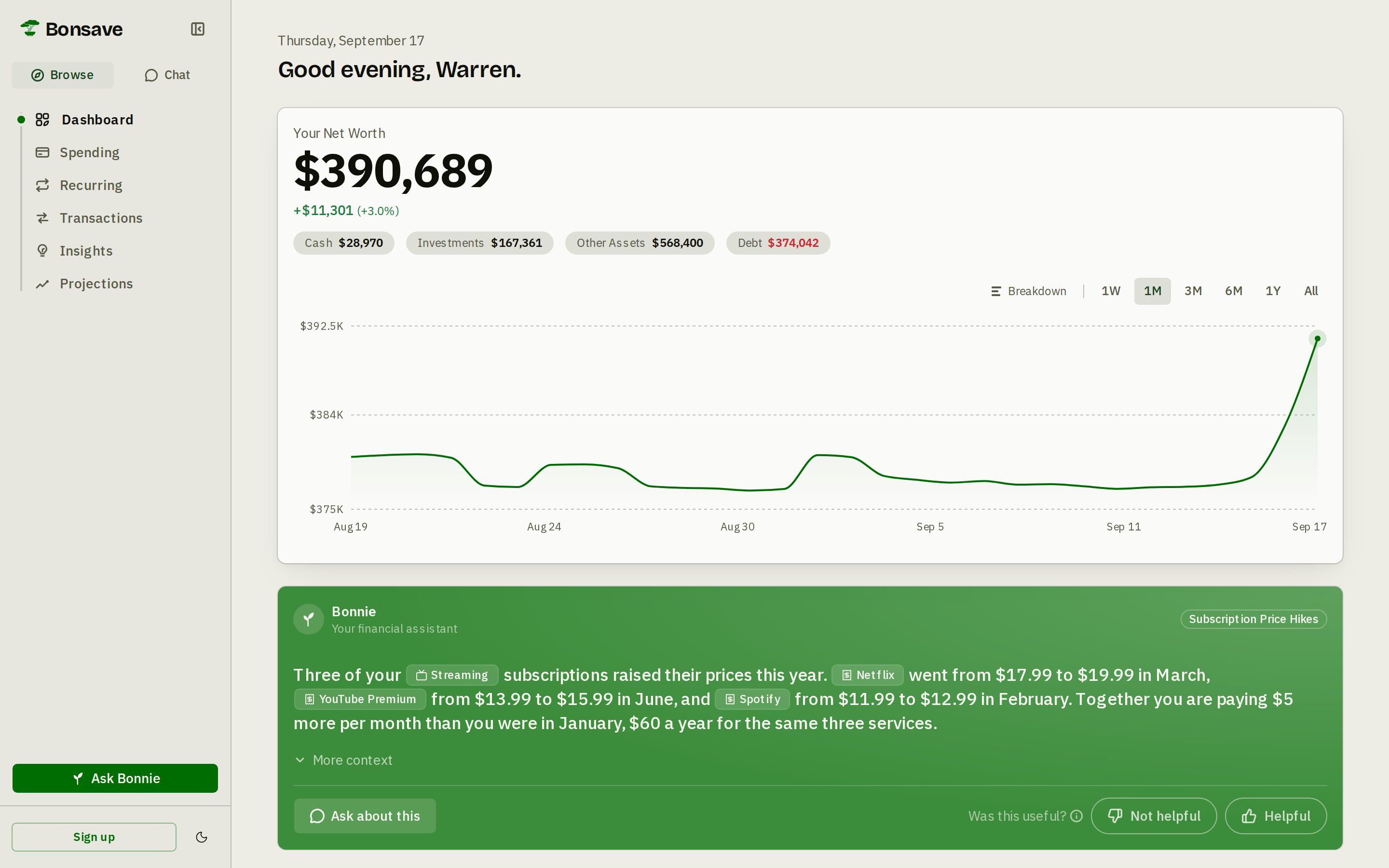
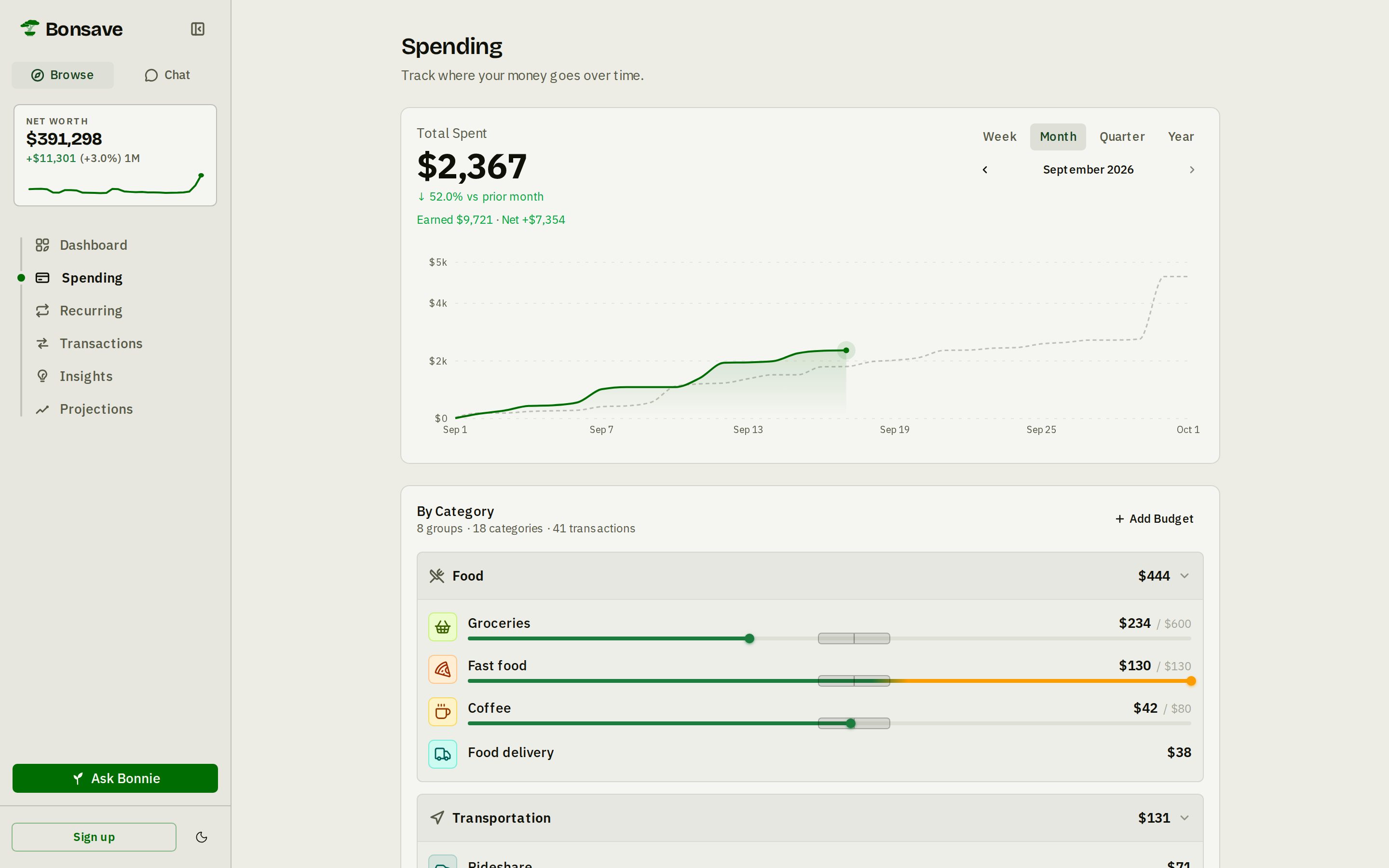
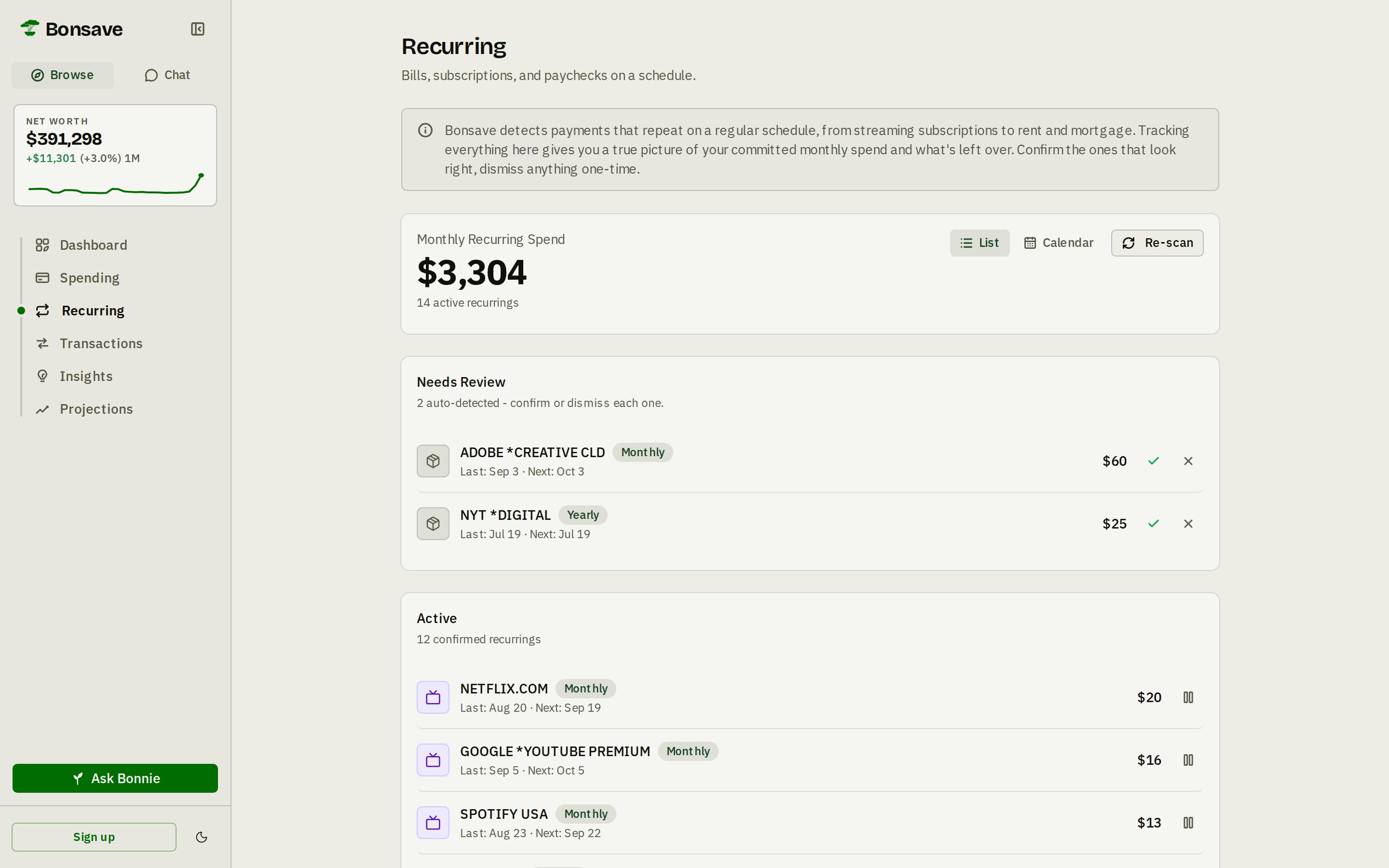
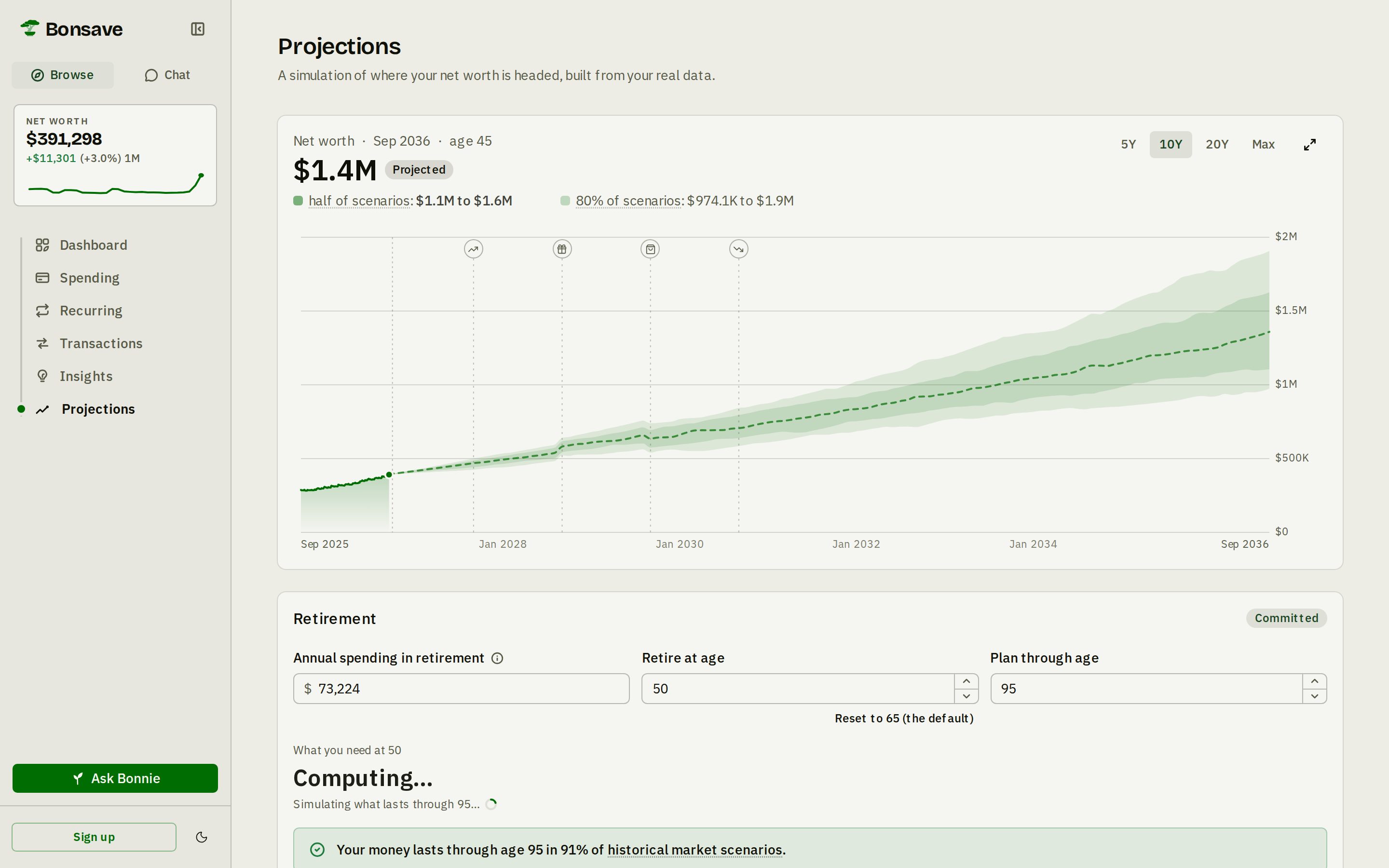
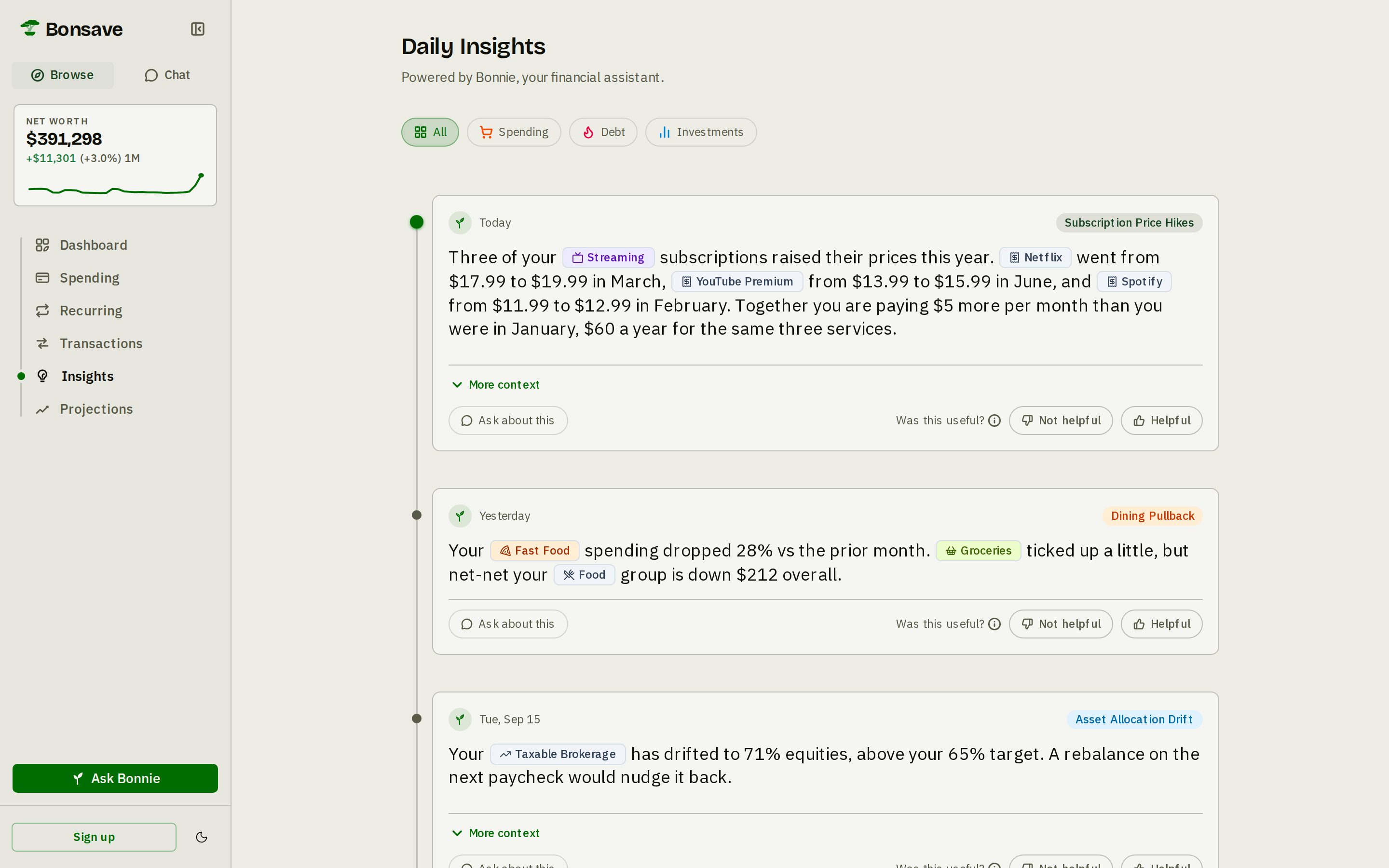
Every screen above is from the live demo, which runs the real app on sample data with no account and no signup. Click around the budget, the recurring list, and the projections before you connect anything.
It doesn’t do shared household access yet, so if you budget as a couple, Monarch is still the better answer. If you don’t, open the demo or try Bonsave free for 14 days. I’m obviously biased about which one.
Frequently asked questions
Is Monarch or Empower better?
Monarch is better for budgeting, especially for couples who manage money together, and costs $99.99 a year. Empower is better for investment analysis and retirement planning, and its Personal Dashboard is free. People who budget pick Monarch. People who mostly invest pick Empower.
Is Empower really free?
Yes. The Empower Personal Dashboard, including net worth tracking, the fee analyzer, and the retirement planner, costs nothing. Empower makes money from its wealth management service, which charges 0.89% a year on the first $1 million it manages, and users with roughly $100,000 or more in linked investments should expect contact from its advisors.
How much does Monarch Money cost in 2026?
Monarch Core costs $14.99 a month or $99.99 a year, with a 7-day free trial. Monarch Plus costs $199.99 a year and adds forecasting, Morningstar fund analysis, gains and losses tracking, and business tracking.
Does Monarch have a retirement planner?
Yes, but only on Monarch Plus at $199.99 a year. Its Forecasting feature projects net worth and cash flow from your real account data and models questions like when you can retire. It moved into the Plus tier when Plus launched in April 2026. Empower's retirement planner is free.
Is Monarch worth paying for if I already use Empower?
Only if you'll actually budget. Paying $99.99 a year for Monarch gets you a real category budget, a household setup built for two people, and a choice of three bank-connection providers. You lose Empower's free fee analyzer, investment checkup, and retirement planner, so many people keep Empower open alongside it.
Can you use Monarch and Empower together?
Yes, and many people do. A common setup is Monarch for the monthly budget and shared household view, and Empower for free portfolio analysis and fee checks. The cost is $99.99 a year for Monarch and nothing for Empower, plus the time spent keeping two apps connected.